
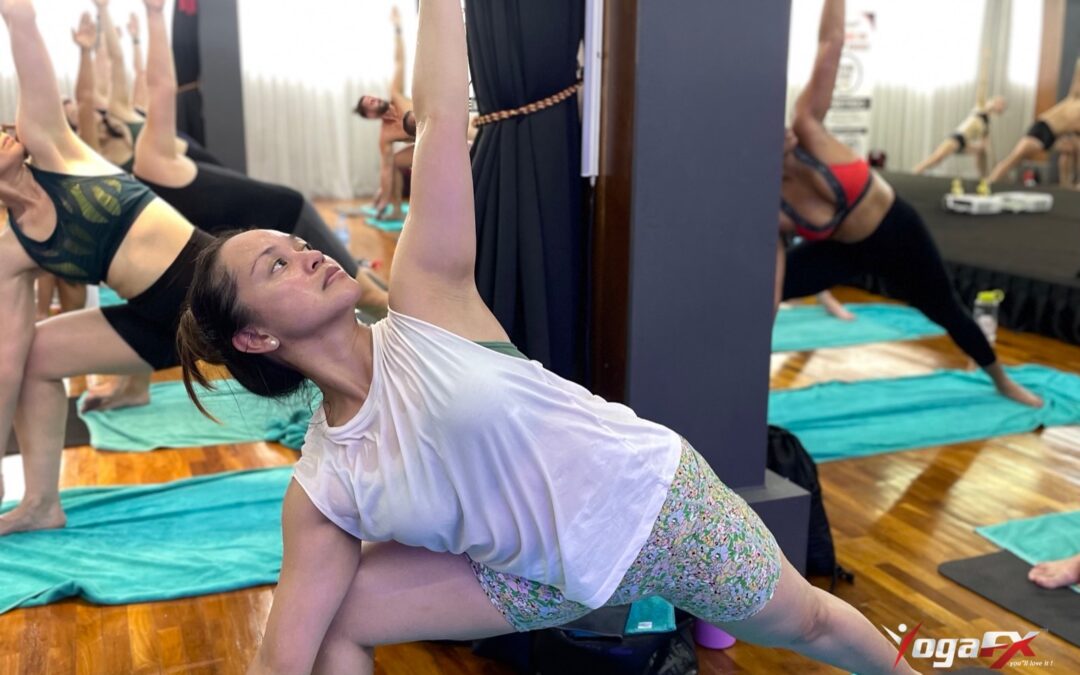
Hot yoga for anxiety has promising signals but no clear verdict yet. The best-known trials measured depression, well-being and stress hormones, not anxiety scores. So is hot yoga good for anxiety? It may help some people feel calmer, and the heat can make others feel worse. Here is what the data covers.
Is Hot Yoga Good for Anxiety? The Short Answer
If you typed "is hot yoga good for anxiety" into a search box, you probably want a straight answer, so here it is. Maybe, for some people, but nobody has proven it. Hot yoga for anxiety sits in a gap. Related research is encouraging, yet none of the trials we read was built to test anxiety.
We teach hot yoga, so we want to be careful. Anxiety is a real health condition, and the people reading this are often tense and tired. Hope is fair. Hype is not. Below, we look at what each trial measured, what it left out, and how you could try a class safely.
Here is the evidence on hot yoga for anxiety in four lines:
- It does show that 8 weeks of heated yoga cut depression scores far more than waiting did, in one trial.
- It does show that a six-week hot yoga course improved well-being in healthy adults.
- It does not show that hot yoga lowers anxiety scores, because anxiety was not the main outcome in these trials.
- It does not show that hot yoga can replace therapy, medication or medical advice.
Mr. Ian Terry, E-RYT 500 and founder of YogaFX, has taught more than 12,000 hours of Original Hot 26&2 yoga. He tells every student the same thing: a class can sit beside care, but it is never a substitute for care.
What the Hot Yoga for Anxiety Research Actually Measured
Most articles on hot yoga for anxiety quietly borrow results from studies about something else. That is understandable, because the topics overlap. Still, a depression score is not an anxiety score, so we checked what each study counted. We opened each source below before using it.
The Massachusetts General Hospital Depression Trial
This is the study everyone cites. Maren Nyer and colleagues ran an 8-week randomised trial of heated yoga for adults with moderate to severe depression, published in the Journal of Clinical Psychiatry in 2023. According to MGH Psychiatry News, 80 people were randomised and 65 were analysed.
The headline result was large. About 59% of the yoga group cut their depression symptoms by half or more, against about 6% of the waitlist group, and the effect size was large (Cohen d of 1.04). The only outcome named in the abstract was a clinician-rated depression scale. Anxiety was not reported. You can read the published abstract yourself.
The Six-Week Well-Being Trial in Healthy Adults
A team led by Bryant Hui recruited 290 healthy volunteers who had never done yoga. Half took up to four free 90-minute hot yoga classes a week for six weeks, and half waited. Attendance averaged 17 classes. The group that practised reported better mindfulness, peace of mind and general health, according to the full paper in Psychosocial Intervention.
That sounds close to anxiety relief, but it is not the same thing. The study measured well-being, mindfulness and mood in the moment. It did not use an anxiety questionnaire. It also had no active comparison group, so it could not separate the heat from the exercise.
The Cortisol and Stress-Eating Trial
Lindsey Hopkins and colleagues studied 52 women at risk of obesity-related illness, with elevated stress and emotional eating. The yoga group practised Bikram yoga for 8 weeks in a room heated to 104°F, while the others waited. The trial, in the Journal of Consulting and Clinical Psychology, looked at stress hormone reactivity and binge eating.
Results were mixed and, in the authors' own word, preliminary. The cortisol benefit showed up only in women who started out as high reactors. Also, just 37% of the yoga group attended the two classes a week they were asked to. Anxiety was not the target here either.
What Participants Said in Their Own Words
After the MGH depression trial, researchers interviewed 57 participants. In that qualitative paper, 7 people (12.3%) described reduced anxiety. At the same time, 64.9% described both positive and negative effects of the class. Interviews are not measurements, but they do tell us the experience is mixed.
0 of 3
Trials aimed at anxiety
Main outcomes were depression, well-being and cortisol, not anxiety scores.
7 of 57
Mentioned less anxiety
In exit interviews after the MGH trial (12.3%). A story, not a score.
290
Healthy adults, 6 weeks
Better mindfulness and general health, with no anxiety questionnaire.
37%
Met the class target
Share of the yoga group who attended twice a week in the 2016 cortisol trial.
64.9%
Felt good and bad effects
Share of interviewed MGH participants who described both kinds.
The Evidence for Hot Yoga for Anxiety, Graded
Not every source carries the same weight, so it helps to line them up. The table below shows who took part, what each source counted, and whether anxiety was in the picture. Read the last two columns first, because the gaps are the honest part of the story.
| Source | Who took part | What it compared | Anxiety measured? | What it can tell you |
|---|---|---|---|---|
| MGH randomised trial (Nyer et al. 2023) | 65 analysed adults with moderate to severe depression | Heated yoga vs waitlist, 8 weeks | Not reported | Large drop in depression scores |
| Well-being trial (Hui et al. 2022) | 290 healthy, yoga-naive adults | Hot yoga vs waitlist, 6 weeks | No | Better mindfulness and general health |
| Cortisol trial (Hopkins et al. 2016) | 52 women at risk of obesity-related illness | Bikram yoga vs waitlist, 8 weeks | No, stress and eating | Preliminary cortisol benefit in high reactors |
| Participant interviews (Nyer et al. 2024) | 57 people from the MGH trial | Nothing, interviews only | Only as a theme (7 people) | How the class felt, good and bad |
| Forum posts and testimonials | Self-selected people | Nothing, no control | Sometimes | That some people feel better |
Notice what every row shares: a waitlist or no control at all. Because of that, nobody can say whether the heat, the exercise, the routine or the company did any work. That limit applies to every claim you will read about hot yoga for anxiety, including ours.
Why Anxiety and Depression Are Not the Same Question
It is tempting to treat the depression result as an anxiety result. After all, the two often travel together, and plenty of people have both. However, they are different conditions with different symptoms and different treatments, and a trial for one cannot be quietly stretched to cover the other.
Anxiety tends to involve worry, a racing heart, tight muscles and a sense of threat. Depression tends to involve low mood, low energy and lost interest. Hot yoga for anxiety could plausibly help where it does not for depression, or the other way round. Or it could do neither. That is exactly why a trial with an anxiety scale as its main outcome would be so useful.
Four Ideas Researchers and Teachers Suggest
Nobody has proved a mechanism. Even so, these four ideas come up often, and they are worth treating as hypotheses:
- Structure. A fixed class at a fixed time gives a restless day a shape.
- Breath and attention. Slow breathing and a demanding posture leave little room for worry loops.
- Predictability. A scripted class with no surprises can feel safe for a nervous mind.
- Company. Sharing a room, without having to talk, can ease isolation.
Each idea fits what students tell us. None of them is a finding. For the stress hormone side of the story, read our review of whether hot yoga increases cortisol, which covers the short rise during class and the calmer response later.
Can Hot Yoga Make Anxiety Worse?
Yes, for some people, and it is the part most articles skip. A heated room is a physical stressor. Your heart rate climbs, you sweat heavily, and the air feels thick. A fast heartbeat and shallow breathing can feel a lot like panic, even when nothing is wrong.
So hot yoga for anxiety can go either way: the same class that settles one student can unsettle another. Our look at hot yoga as a cardio workout shows how high the heart rate can run. If you already notice your heartbeat when you are nervous, expect the first few classes to test you.
Signs to Slow Down or Leave the Room
- Dizziness, nausea or a pounding headache.
- A heartbeat that does not settle during the rest postures.
- A rising wave of panic that breathing does not ease.
- Tingling, confusion or feeling faint.
Leaving the room is allowed. Sitting out a posture is allowed. In fact, learning to notice these signals and respond calmly is part of the skill, and no good teacher will push you past them. Anyone trying hot yoga for anxiety should hear that on day one.
Hot Yoga for Anxiety Is Not a Substitute for Care
Anxiety is common, and it responds well to treatment. Hot yoga for anxiety is, at most, an addition some people find useful. It does not replace a doctor, a therapist or prescribed medication. Harvard Health says the same about the depression research: talk to your doctor before trying it.
Who Should Check First
Please speak to a healthcare professional before your first class if any of these apply:
- Heart or blood pressure problems. Heat raises heart rate, so ask first. Our review of hot yoga and heart health explains why.
- Medication that affects heat tolerance. Some medicines change how you sweat or regulate temperature. Your prescriber can tell you.
- Pregnancy, a history of fainting or heat illness. Heated rooms carry extra risk for these groups.
- Panic attacks. If you get them, tell your doctor and the teacher before you start.
- Current treatment. Never stop or lower medication because yoga feels helpful. Changes belong with your prescriber.
Signs You Need More Than a Class
See a healthcare professional soon if worry is constant, if you avoid normal life because of it, if sleep or appetite change a lot, or if you are using alcohol to cope. If you are thinking about harming yourself, call or text 988 in the US, or contact your local emergency number, today. Hot yoga is not a crisis tool.
Trying Hot Yoga for Anxiety: A Careful Plan
Say your doctor agrees, and you want to try hot yoga for anxiety yourself. The safest approach copies what the trials did, but gently. Start well below the research dose and build only if you feel good. This plan follows that logic.
- Check with your doctor first. Mention the heat, any medication and any panic history.
- Tell the teacher you are new and nervous. A good teacher will show you where to stand, and that the door is yours to use.
- Start with one class a week. The trials asked for two, but they also saw attendance fall short, so one is a fair beginning.
- Build toward two a week only when you recover well and sleep normally.
- Rate your anxiety from 1 to 10 before and after each class. A simple note shows what changes over weeks, not hours.
- Drink water, rest when you need to, and skip any posture that spikes your heart rate. Pushing through proves nothing.
- Keep your existing care. Yoga joins your plan. It does not replace anything in it.
Expect the first two or three classes to feel hard. The room is hot, and ninety minutes is a long time. That is normal, not a sign something is wrong with you. If a class leaves you drained for a full day, scale back and tell your doctor.
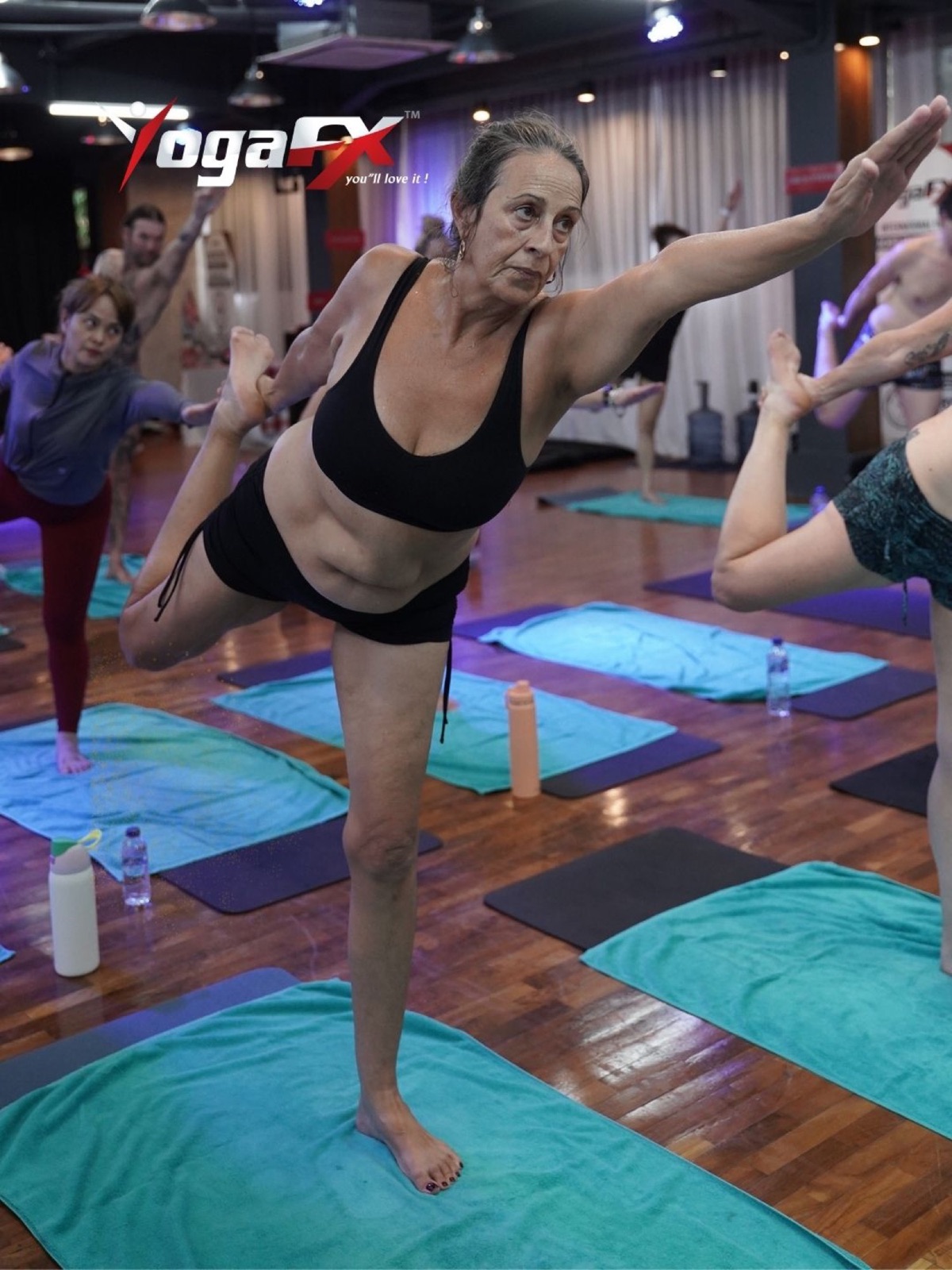
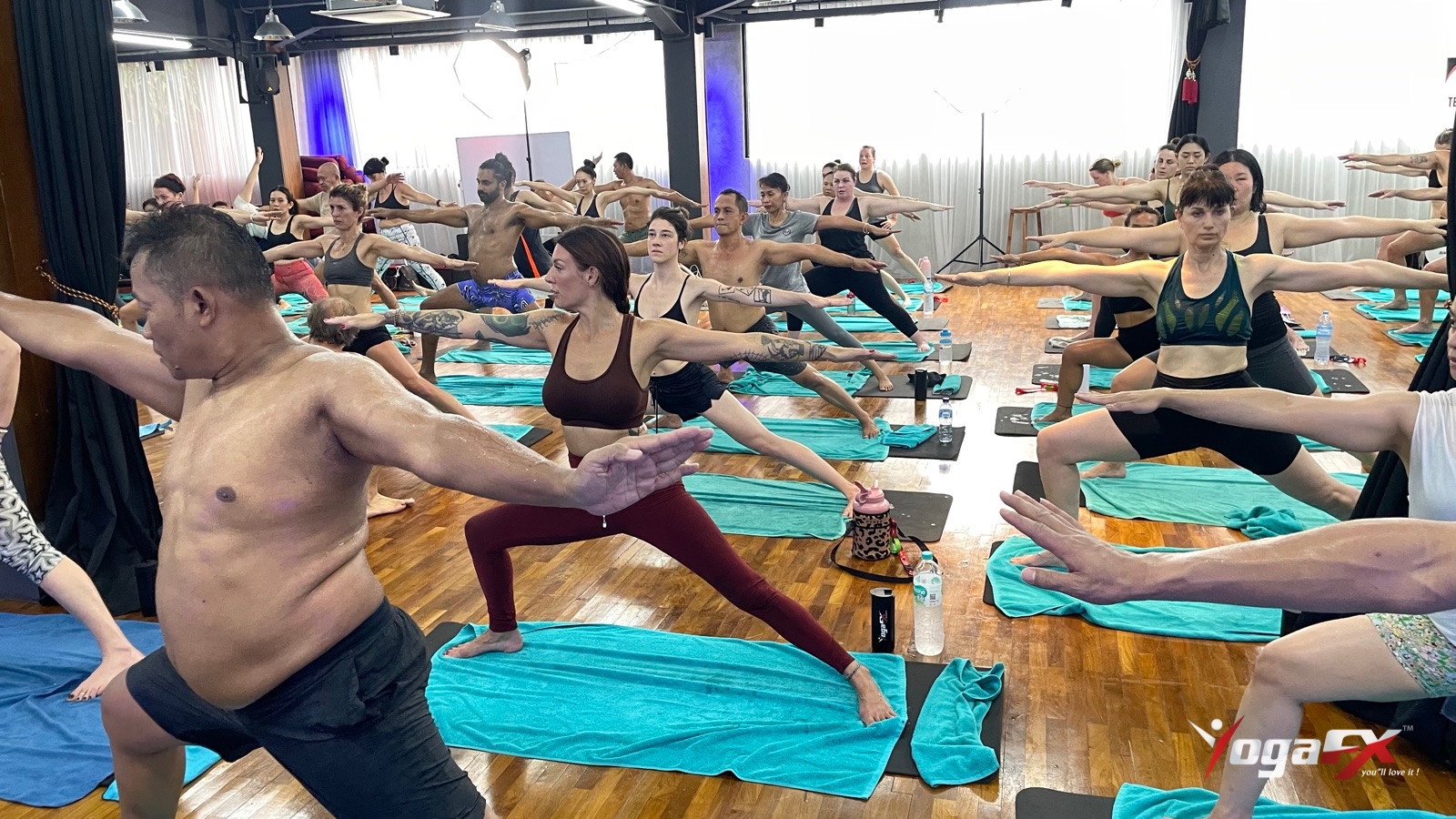
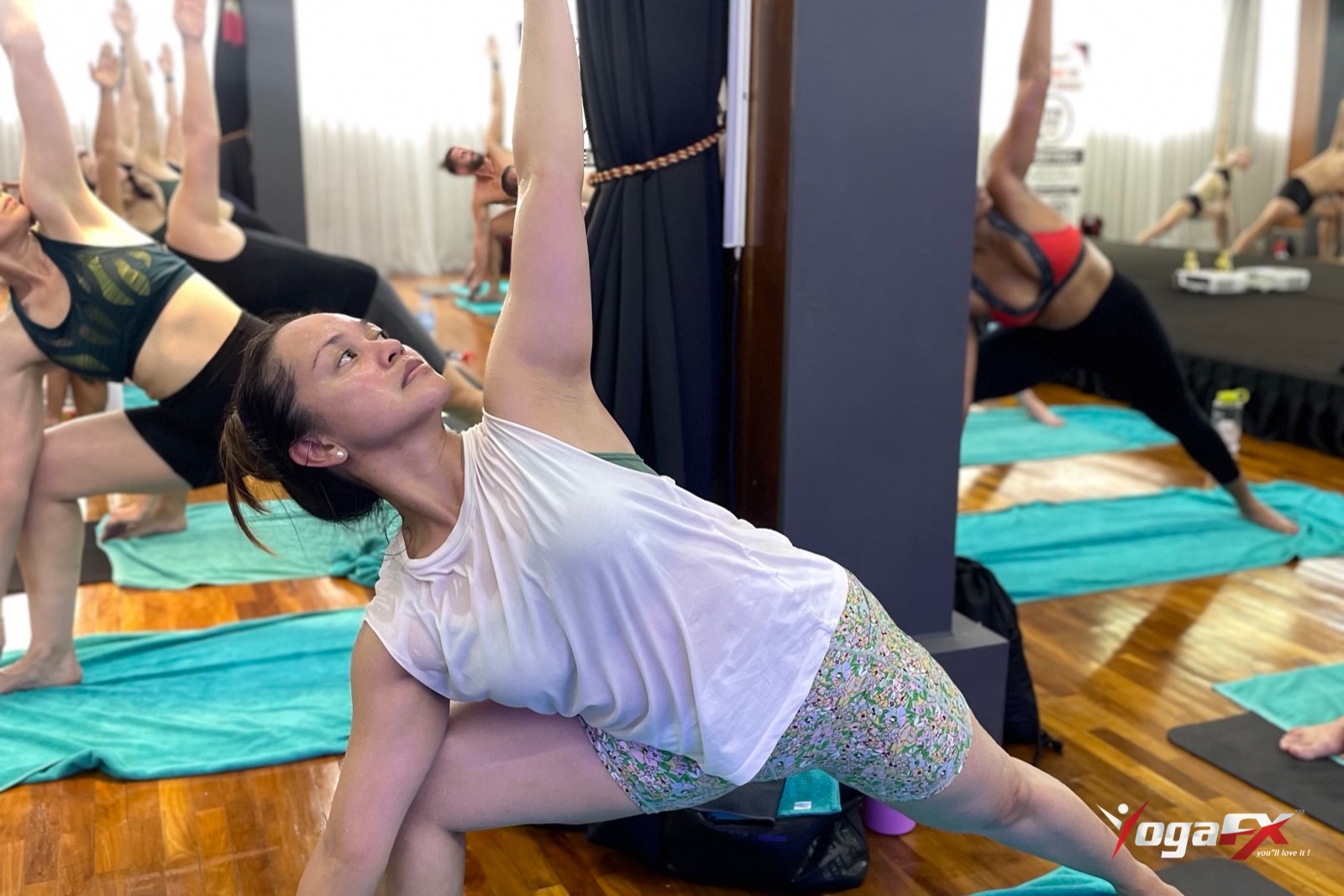
At YogaFX, a class runs 90 minutes at about 40°C and 40% humidity. The teacher follows a scripted dialogue, so there is no music, no demonstration and no need to talk. Students often tell us that predictability is what lets them show up on a nervous day. Each posture asks for balance, breath and focus, which keeps the mind busy.
What Our Trainees Say About the Experience
Trials give averages, so students give us the stories. The comments below come from YouTube reviews of our teacher training. They describe effort, doubt and pride. They are not evidence that hot yoga for anxiety works, and we share them only so you can see the human side of a hard class.
"This is really hard and it's really wonderful at the same time."
Liz, YouTube review, 2025
"I wanted to quit in my first day, second day... I'm glad I did it." (She says Mr. Ian's words about not quitting helped her stay.)
Daniela, YouTube review, 2025
Ani, in her YouTube review from 2026, thanks Mr. Ian for the chance to train and says she feels fitter and stronger after the course (paraphrased, translated from her spoken English).
Notice the common thread. People describe doubt first and pride second, which fits the idea that a structured class helps you stay with discomfort. It proves nothing on its own. You can watch Liz's full review below.
Daniela also tells her story on camera, including the moment she nearly left on day one.
Bikram, Heated and 26&2: Which Class Did the Studies Use?
You will see this topic searched as Bikram yoga for anxiety too. The MGH team describes heated hatha yoga in a 105°F room, and the Hopkins trial used Bikram yoga at 104°F with 26 postures and two breathing exercises. Today many studios, including ours, teach that same sequence as Original Hot 26&2.
That overlap is useful, but it has limits. The trials used community studio classes, and your local class may differ in temperature, humidity and teaching style. So ask any studio what it teaches and how it treats students who need breaks.
For other angles on the same research, read our pieces on hot yoga for depression and hot yoga and mental health in men, which look at who the trials left out.
From Student to Teacher: Learning the Method Online With YogaFX
Some people who try hot yoga for anxiety, or simply love the practice, want to understand it properly, and a few want to teach it. That is the purpose of our hot yoga teacher training online. It is education, not therapy: you study the 26 postures, the dialogue and the science, and you learn to teach safely.
The course is led by Mr. Ian Terry, E-RYT 500, who has more than 12,000 teaching hours. He trained for 5 years, from 2014 to 2019, with the founder of the method. Since 2017, YogaFX has trained more than 1,500 graduates from 80+ countries. A big part of teacher training is learning when to say "please check with your doctor" and when to send a student to a professional.
- See how online study works. Read the 8-week breakdown of online yoga teacher training.
- Check any course first. Use these 7 honest checks for an online hot yoga certification.
When you are ready for the heat, the next step is the 6-day Bikram Hot 26&2 Yoga Teacher Training MasterClass in Bali. The next batch checks in on Sunday 24 January 2027 at Soham Wellness Center in Seminyak. The Early Bird price is US$1,899 (normally US$1,999), with payment plans from US$250 a month.
FAQ
Is hot yoga good for anxiety?
Hot yoga may help some people feel calmer, but the research is thin. The main trials measured depression, well-being and cortisol, not anxiety scores. In interviews after one trial, 7 of 57 participants described less anxiety. Treat it as an addition to care, and check with your doctor first.
Can hot yoga make anxiety worse?
It can for some people. Heat raises your heart rate and makes you sweat, and a pounding heartbeat can feel like panic. If you feel dizzy, panicky or faint, sit down or leave the room. People with panic attacks should tell their doctor and teacher before starting.
Does hot yoga increase cortisol?
Cortisol can rise during a class, because heat and effort are stressors. A 2016 trial in women with elevated stress found a preliminary benefit in stress hormone reactivity after 8 weeks, but only in high reactors. One small trial cannot settle the question, and it did not measure anxiety.
What type of yoga is best for anxiety?
Researchers do not know yet. None of the hot yoga trials we read compared styles for anxiety. Many people choose a style they enjoy and can attend regularly, because consistency matters. A doctor or therapist can help you decide what fits your situation, your health and your comfort with heat.
Can I do hot yoga if I take anxiety medication?
Possibly, but ask your prescriber first. Some medicines change how you sweat or handle heat. Never stop or change medication because yoga feels helpful. In the MGH depression trial, some participants kept taking their medication, so yoga was tested as an addition, not a replacement.
Still have questions? Mr. Ian and the YogaFX team answer them personally. Take the 2-minute quiz to see if you're ready to teach hot yoga, or message Mr. Ian on WhatsApp and we will point you to the right next step.
This article is general information, not medical advice. If you think you may have an anxiety disorder, please consult a healthcare professional.